
Cornelia Maria Lissone. A name that is rarely heard today, but without whom Wester-Amstel would not exist as it does now. She quietly led the first Dutch travel agency, yet her name is absent from the history books. Who was this woman?
A Calling from an Early Age
Cornelia Maria Lissone was born on 14 August 1871 in Delfshaven, the daughter of Catherina Schlegers and Jacobus Lissone. Jacobus Lissone, who once organised a trip to London as a favour for a friend, saw it evolve into a thriving enterprise: Lissone & Son, the very first travel agency in the Netherlands.
Cornelia was involved in her father's business from an early age, along with her mother, brothers Jacques and Franciscus, and her sister Johanna. It was a close-knit family business. Her mother managed the administration and finances, and it is believed that Cornelia, as a young woman, took on the same responsibilities—overseeing income and expenditure. Later, she was introduced to selling travel packages.
Against the Tide
What many do not know—and what is not found in books or articles—is that after the death of their father in 1907, it was not the eldest son Jacques who took over the business, but Cornelia: she became the director of the first travel agency in the Netherlands.

A woman as the director of a company? That was almost unheard of at the time, but Cornelia lovingly defied many rules and prejudices. And there were quite a few of them.
In Cornelia’s time, only women from the lower classes worked—out of necessity—as teachers, telephone operators, seamstresses, or factory workers. If you belonged to the middle or upper class, like Cornelia, paid work was associated with poverty and shame. Moreover, only men held high-ranking positions. A woman as a director was unthinkable and therefore remained a secret. “Lissone & Daughter” would have scared off customers. After all, a woman at the helm could only mean failure.

Travel for Everyone
The reality was different. Under Cornelia’s leadership, the company grew and flourished. She had creative ideas. For example, she commissioned the Spijker car factory to build a large vehicle capable of transporting a group of people. Spijker set to work at his drawing board, and in 1914 “The Red Monster” was born: the first touring coach in the Netherlands. Outings to tulip fields and cherry orchards became wildly popular; people queued up for them.
Solo travel for women—also highly unusual at the time—was also made possible by Lissone & Son. In those days, women were barely allowed to leave the house unaccompanied, let alone travel alone. Yet the company managed to convince customers: under their guidance, the trips would not be too strenuous, and protection would be provided. In photographs from that time, many foreign trips can be seen to consist of groups of women.
Love and Struggle
It’s not as if everything came easily to Cornelia. She had to fight for what she wanted—and fight she did.
In 1897, during a trip to the north, she fell in love with Severin Ludvig Movig. Severin, a Norwegian and the son of a shipowner, worked for Lissone & Son as a tour guide in Norway. They wanted to marry, but Cornelia’s parents would have none of it. If Cornelia were to marry, she would legally become incapacitated under Dutch law at the time, and her husband would take control of the company. That had to be prevented. Her parents blocked the marriage through a legal objection known as a stuiting.
But Cornelia would not accept this. The couple persisted, and a few months later, it became clear that Cornelia was pregnant with her first (and only) child, Ludvig Emil Movig. This forced her parents into a corner—they had no choice but to give in.
However, the problems were far from over. Severin was not allowed to become the head of the successful Lissone & Son. Cornelia, therefore, had to find a way to escape the legal restrictions placed on married women. After some investigation, the family found a loophole in the Civil Code of 1837: it included one exception to the rule of legal incapacity—the status of openbare koopvrouw (public businesswoman). If Cornelia registered as such, she would retain the legal authority to conduct business independently.
She managed it. In 1898, heavily pregnant, Cornelia stood at the altar and continued her work in her father’s company as a registered public businesswoman. In doing so, she became a true exception to the norms of her time.
That special status did not come without its drawbacks. Johanna Lissone, unlucky in love and without Cornelia’s unique legal position, looked on at her sister’s success with envy. That jealousy would eventually drive her to commit a terrible act.
New Times, Old Wounds
Despite the battles she had won, Severin Ludvig never settled in the Netherlands. In 1902, he returned to Norway. Some claimed it was because of his asthma; others said he was planning to open a branch of the travel agency. What is certain is that his poor relationship with Cornelia’s brothers and her sister Johanna played a role. Cornelia wrote him letters, but when no reply came, she gave up.
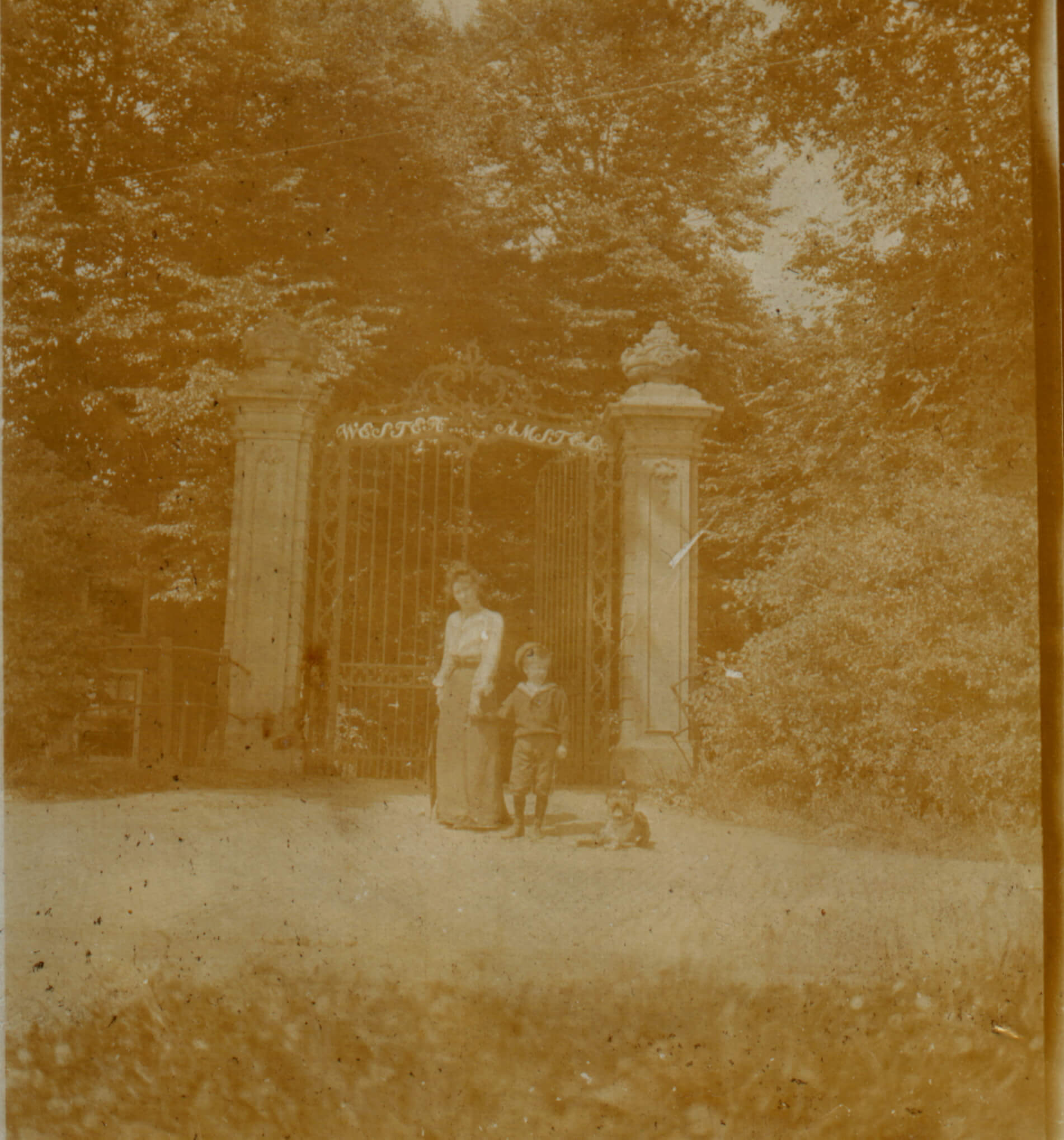
Years passed. Her father died, she took over the business, and one success followed another—until the outbreak of the First World War. Lean years followed. In 1921, the travel agency merged with Lindeman, and by the latter half of the 1920s it was sold off entirely. Cornelia handed over the reins and turned her attention to Wester-Amstel, the country estate where she, her mother, and her sisters Johanna and Catherina had been living since 1901.

The Price of Preservation
She was deeply attached to the house. During the war years, Wester-Amstel had provided for them: in a time of scarcity, they possessed something rare and in high demand—wood. The many trees in the park surrounding the house were worth their weight in gold, and thanks to that wood, meat and potatoes were on the table in the evenings. But, as she wrote in her first post-war letter to her son, the avenue trees were preserved.
Wester-Amstel had to remain in the family. Above all, Cornelia wanted her son—the only grandchild of her father—to inherit it. So, she decided to buy out her brothers and sisters for their share of Wester-Amstel.
It was a costly decision. The large dent in her finances meant she was unable to visit her son, who by then had moved with his wife to the Dutch East Indies. Their contact was limited to letters. Letters they continued to faithfully exchange, week in and week out, year after year. Until, in 1947—more than two decades later—they could finally look each other in the eye again, when Ludvig returned to the Netherlands for good.
A Stolen Past
In the wartime year of 1944, Johanna, Cornelia’s younger sister, passed away. While sorting through Johanna’s belongings, Cornelia made a horrifying discovery: in a secret drawer of Johanna’s desk, she found a stack of letters. Letters from her husband Severin, written in reply to her own—letters that Johanna had intercepted and hidden. For years.
In 1945, Cornelia resumed her correspondence with Severin and visited him in Norway in 1948. Their love rekindled. When Severin asked why she had stopped writing, she could only remain silent.

Return and Farewell
Despite her reunion with her husband, Cornelia returned to her beloved Wester-Amstel. She remained there until her death in 1955. Until the very end, she held fast to her goal: Wester-Amstel had to stay in the family. On her deathbed, she made her son Ludvig promise to do the same. He kept his word.
Cornelia Maria Lissone. A remarkable and strong woman who knew what she wanted and remained true to her goals. She stood for the preservation of Wester-Amstel and passed it on to her only descendant. As a result, Wester-Amstel was not only preserved for the family, but is now also accessible to you, the visitor.
By: Karen Netscher